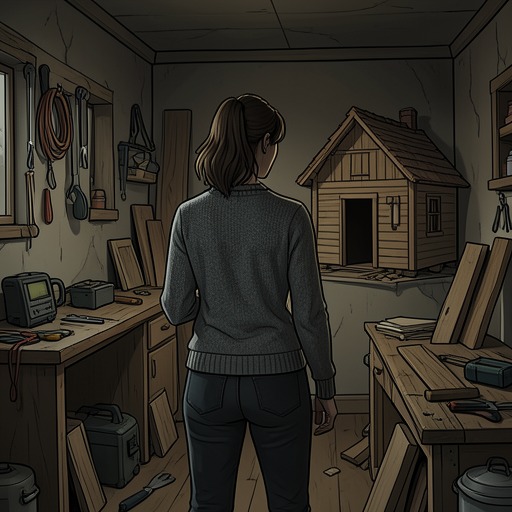
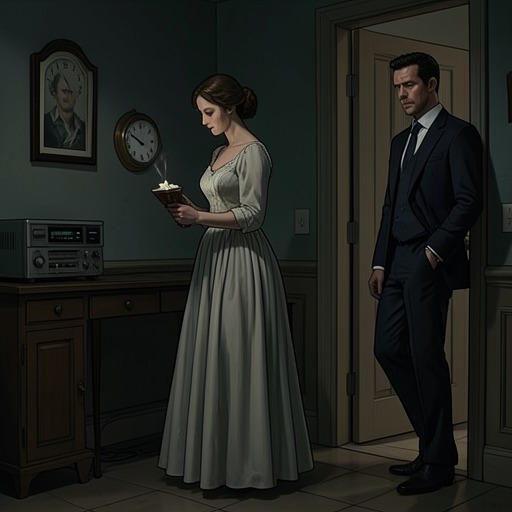
Brett and Andrew’s breakup
The Life ListBrett and Andrew’s breakup turns a negotiation over work and money into a decisive rupture in their relationship. Andrew has agreed to help Brett pursue her life-list goals, but he wants her to help him obtain a job and salary at her family’s company. When Brett refuses to override her mother’s judgment, the disagreement exposes a conflict over what each partner believes the other owes them—and is followed by Brett’s departure from the home they shared.
Causes and the bargain between them
The immediate dispute begins with a practical question: whether Brett and Andrew should look for a smaller home they could afford by pooling their savings. Andrew responds by reminding her that she is about to inherit a fortune. Brett, whose stomach tightens as she raises a question she has been carrying for weeks, asks whether he would still help with her list if there were no inheritance. Andrew bristles at the suggestion that his willingness might be a test.
Brett presses the issue, asking whether his support has nothing to do with money. Andrew’s angry answer gives the conflict its concrete terms. He says he has agreed to Brett’s requests concerning a dog and a teaching job, and insists that what he wants in return is a position in the family business, with the salary that goes with it. Brett privately recognizes both sides of the exchange: he has been doing what she asked, yet she is not satisfied. His request is not beyond her power to grant. She can imagine calling Catherine and having a place found for him in the legal team, finance department, or human resources. The ease of arranging it only sharpens the question of whether she should.
Brett’s refusal and the break
Brett decides that she cannot help Andrew. Her reason is not that he could not fit into the company, but that she does not feel right going against her mother on the matter. Andrew rises from the sofa, and when Brett reaches for him, he jerks away. He says she has changed and is no longer the agreeable girl he fell in love with. Brett does not deny the change; she wipes away a tear and apologizes for ruining the evening.
Andrew paces the room, dragging a hand through his hair. Brett understands the movement as a decision about whether she will remain part of his life. He stops by the bay window with his back to her, then turns after his shoulders fall. His final verdict is more severe than the argument over employment: Brett has, he says, ruined her life. The scene makes the breakup a reversal in what Brett thought she was protecting. She has refused to make a decision she considers wrong, but immediately experiences the loss as the collapse of her home and romantic future. She calls Andrew difficult, even a jerk, while still thinking of him as hers; she also fears that without him she will never get pregnant.
That night she cannot bear to sleep in her mother’s bed, which she associates with the mother whose decision has become the focus of her anger. She takes a comforter downstairs and sleeps on the sofa. In the streetlight, her eyes meet her mother’s in a photograph from an awards ceremony where her mother was named Chicago’s Businesswoman of the Year. Brett studies the image’s familiar beauty and the wisdom and serenity she believes it captures, then takes it down and places it on the coffee table in front of the sofa. Even in the moment when she thinks of her mother as the enemy, the photograph keeps the relationship present in the room.
Leaving the shared home
The separation becomes material as well as emotional. On a Wednesday afternoon, Brett arrives at Andrew’s loft carrying empty boxes and hopes to leave before he returns from work. She packs without folding or sorting, starting with the armoire and then clearing her closet. Thinking of the women at Joshua House, who have only three drawers and share a closet, she feels repelled by how much she owns. She carries four boxes to her car, drives them to her mother’s house, unloads them in the foyer, and goes back for more.
By eight that evening, Brett has removed all her clothes, makeup, lotion, and hair products. As she walks through the loft for the last time, she recalls how much of the household she bought while living there: the dining table, sofa and loveseat, two high-definition televisions, and a bedroom set purchased during their first week together. That set includes a maple sleigh bed, a chest of drawers, two bedside tables, and the antique armoire she once said she could not live without. Even the Ralph Lauren towels and Missoni bath mat register as things she brought into a place that never felt like home. Her inventory gives the breakup a physical measure: the loft had been furnished with pieces of her, but those purchases had not made it feel like hers.
In the darkness of the kitchen, Brett sees Andrew chase Megan upstairs with a bottle of Glenlivet in one hand and two glasses in the other. The next afternoon she meets a moving van at the loft. She tells the movers to take everything, then makes two exceptions: the brown chair in the living room and, after reconsidering, the mattress. Brett and the movers pack towels, sheets, dishes, cookware, and silver, and carry out the large items. They finish in three hours, before Andrew gets home. When asked where the belongings should go, Brett directs them to Carroll Avenue, to Joshua House. The house that had never felt like home is now emptied of her, while its furnishings are redirected toward a place where residents have far less space and property.
Consequences and significance
The breakup is not presented as a single exchange of angry words followed by an immediate, clean departure. It unfolds through distinct acts: Brett refuses the job arrangement, spends the night on her mother’s sofa, packs her personal belongings, witnesses Andrew with Megan, and returns with movers to clear out the shared home. Each step turns an abstract loss into a change of place and possession. Brett’s refusal marks a change in her willingness to use her family’s company to secure Andrew’s ambitions; moving out makes the end of their shared household unmistakable.
The donated furniture also gives the separation a consequence beyond the former couple. Brett’s final decision about the household goods sends them to Joshua House, rather than leaving them behind in the loft. Her possessions had once seemed like an attempt to make that home feel inhabited by her; after the breakup, they become useful objects for others. The ending therefore holds two facts together: Brett has lost the home and partner she feared she could not do without, yet she is able to choose where the material remains of that life will go.